

Bathroom guide
Microcement in bathrooms and showers
Plan microcement bathroom walls and shower surfaces with Nikkolor guidance on waterproofing, preparation, protection, samples and project specifications.
Buyer guide
A bathroom photograph can help you choose an appearance, but it cannot approve a waterproofing system or a shower floor. Nikkolor’s published guidance separates the decorative finish from the substrate, waterproofing, drainage and protection. Make those decisions first, then choose colour and texture. This guide brings the existing bathroom cautions together so a kit order is based on the intended use, not just the room’s name.
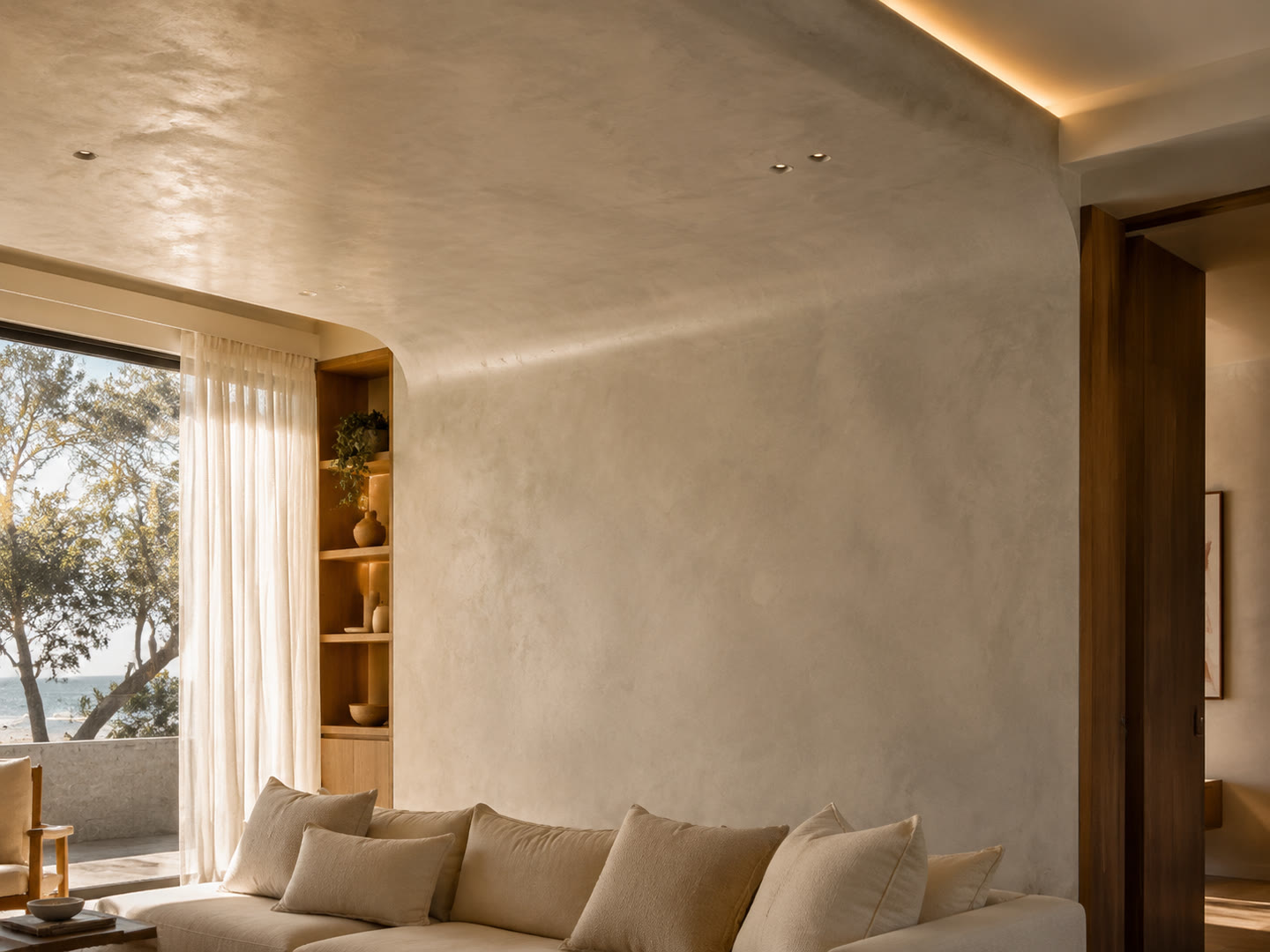
Is microcement the waterproofing layer?
No. Microcement is a decorative finish, not a waterproofing membrane. The site calls for compliant waterproofing in bathrooms and a project-specific specification. Falls, drainage, penetrations and movement joints are separate work. Those requirements are not supplied simply by selecting a bathroom-related image, a Pro kit or a protective finish.
Before buying, describe the exact surface: a bathroom wall, a shower wall and a floor do not automatically share the same exposure. Check the substrate and the waterproofing interface against the current technical documents. If the published information does not confirm the complete arrangement, ask Nikkolor for a specification rather than treating this general guide as technical approval.
Can I cover existing bathroom tiles?
Existing tiles can be considered only after the relevant release checks. The system guides cover adhesion, grout lines, substrate condition and preparation, while the buyer’s guide calls for joints and deflection to be assessed. Loose or drummy tiles must be corrected. A finish cannot solve movement or unresolved moisture underneath it.
The preparation options on the kit page let you select smoothing and reinforcement separately. They are not an assessment tool. Choose the build-up from the correct system guide and record it for the applicator. In particular, mesh does not replace movement joints, and a layer-order illustration must not be converted into a thickness allowance or transferred to a different project.
Does a standard kit approve a shower floor?
No. Standard kits use Decor Finish, with limits that must be read alongside the application description. The site states that Decor Finish without a slip-resistance additive is only for walls and dry interior floors, and that wet floors need a written project specification. The general word “bathroom” does not remove those conditions.
The optional floor slip add-on is a separately priced product. Adding it does not establish an Australian slip classification or approve shower floors, wet floors or exterior applications. Do not infer a tested rating from a tick box. Confirm the complete applied system and the actual exposure before deciding that a particular floor specification is suitable.
What changes when I select a Pro kit?
The main protection difference is VetroLiquido PRP in place of Decor Finish. Pro kits are ordinary online purchases, with size, finish, smoothing and mesh choices on the product page. The selected contents and price are shown there, and shipping is calculated at checkout. Purchasing a Pro kit still does not replace assessment of waterproofing, joints and drainage.
PRP has its own current technical data sheet and project specification. Do not transfer Decor Finish’s application or handover instructions to it. If your planned shower use is not resolved by the published documents, obtain guidance for that project. The protection choice is one part of the system, not permission to omit other work.
How do I choose the bathroom colour?
Use the Colour Room’s bathroom illustration to compare the 16 colour families and three tones, then look at the physical boards under the room’s actual light. The researched paint, timber, tile and tapware pairings are suggestions, not technical specifications. A screen cannot reproduce the finished sheen, texture or every change in daylight.
The AI Visualiser can help you picture a selected colour on your own room photo. It shows a smooth Cemento 3D finish and is a guide, not a sample approval or waterproofing assessment. On-site appearance varies with the substrate, trowel work, sealer and light. Approve a physical board of the intended combination before making the final choice.
What should be handed over after the work?
Record the products and protection used, the cure dates and the restrictions for the owner. Follow the care page and the applicable protective-finish data sheet before cleaning or returning the area to service. Avoid abrasive cleaning, wipe spills promptly and ask about unusual cleaning products. Drying and curing are not interchangeable.
The five-year product warranty covers manufacturing defects under its terms; it is not a warranty on the installer’s application work. Keep the invoice and agreed project information. For an installed project rather than material supply alone, contact Lux Cement and discuss the scope with the installer. A separate workmanship warranty, if offered, comes from the installer.
Common questions
Does microcement replace bathroom waterproofing?
No. Compliant waterproofing and the project’s falls, drainage and joint details remain separate requirements.
Does a floor add-on approve a shower floor?
No. The add-on does not establish an Australian slip classification or wet-floor approval.
Where do I confirm a shower specification?
Read the current technical data and contact Nikkolor with the substrate and exposure details if the complete system is not confirmed.
Before you buy
- Prices are AUD catalogue estimates, not quotations. Freight, tools, labour and substrate work are extra.
- Confirm the current technical data sheets and a physical sample before specifying.